Blanco County
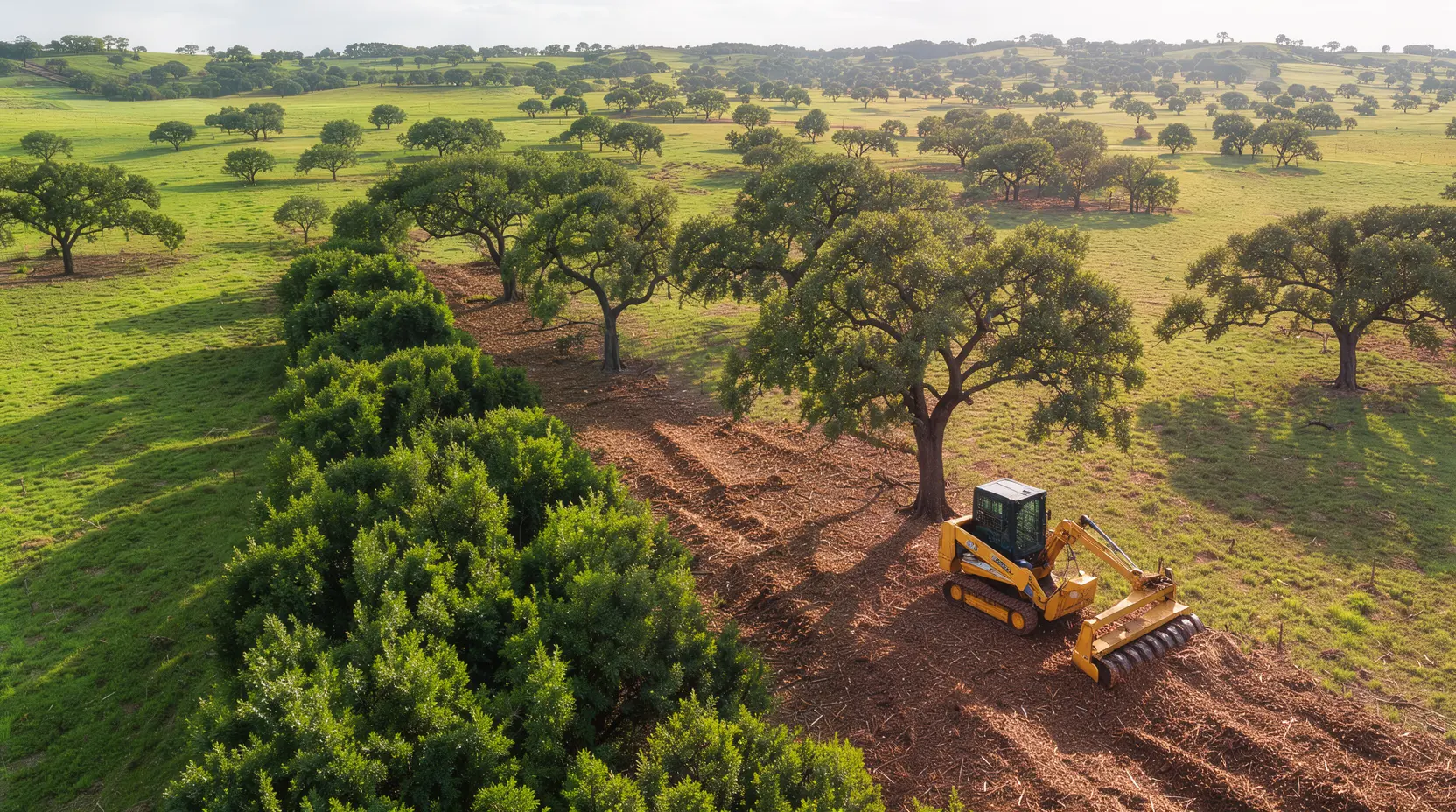
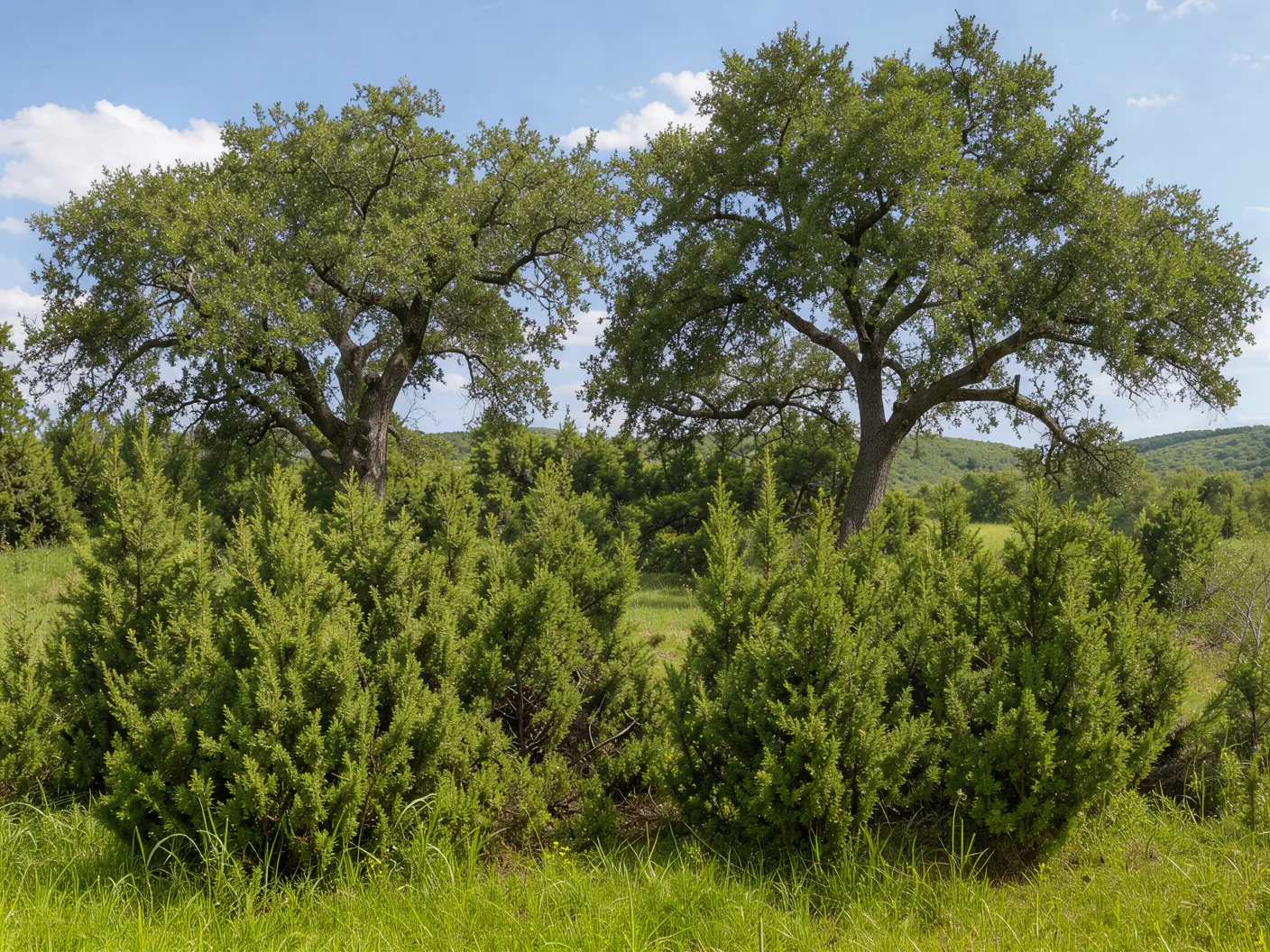
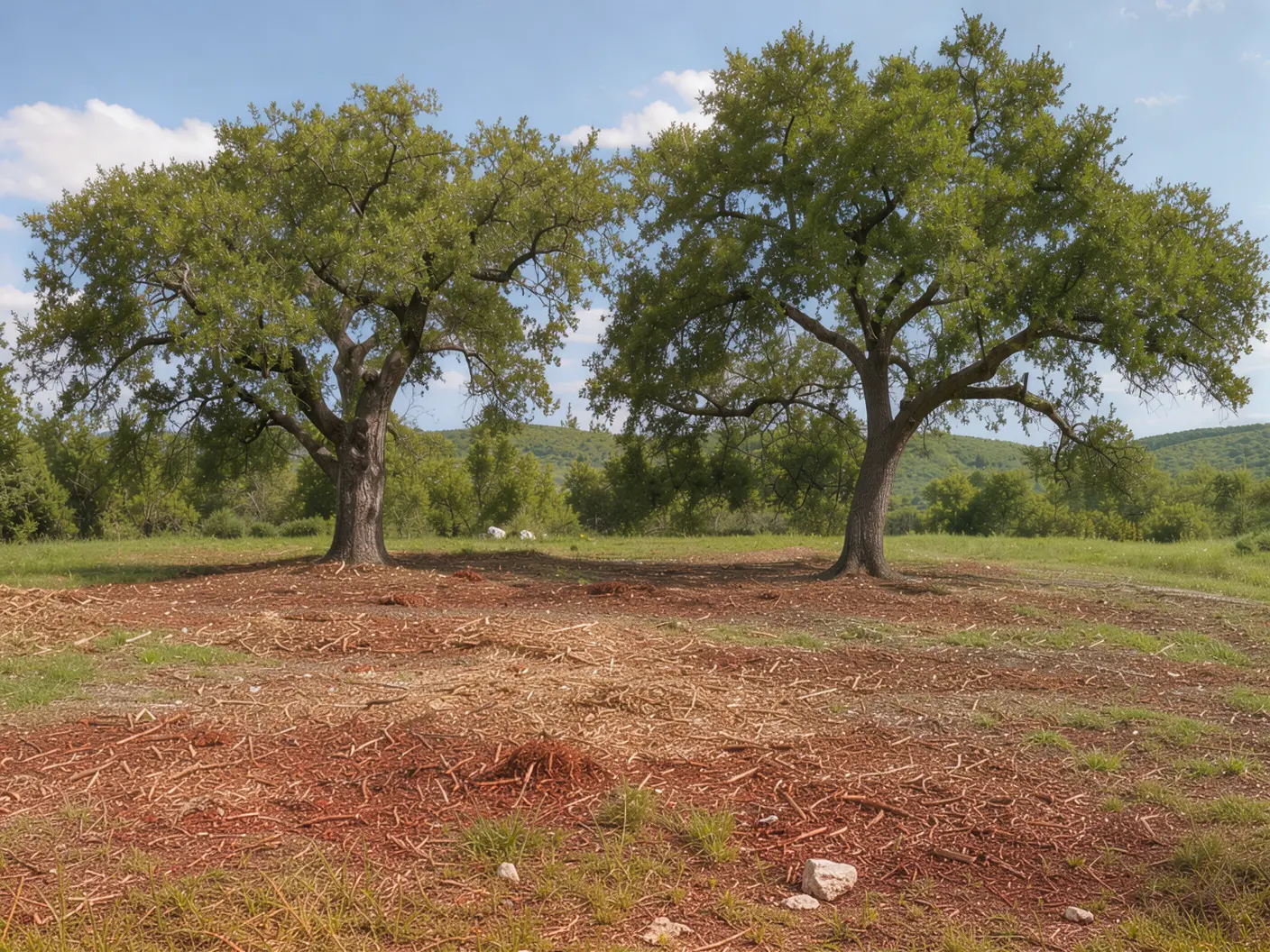
55% cedar canopy. 6 days, 300-hp mulcher. $27,500 plus transport. The spring below the stock tank ran again the next wet season.
I wrote EQIP brush plans for twelve years before I ran a mulcher. Most of them sat in a drawer, so in 2014 I bought the machine myself and have cleared full time since 2015. Pruitt Range & Brush is a land clearing company with three yards: Johnson City, TX, Lindale and Weatherford. The skid steer mulcher is $2,800 a day, transport included within 60 miles of any yard, with a free on-site estimate inside that circle. We clear cedar, mesquite, yaupon and pine understory. Fill out the form or call (832) 987-3495. Teo will call you back before the end of the business day.
I wrote EQIP brush plans for twelve years before I ran a mulcher. Most of them sat in a drawer. In 2014 I bought the machine myself.
Cedar canopy tells me the price before I ever walk your tract.
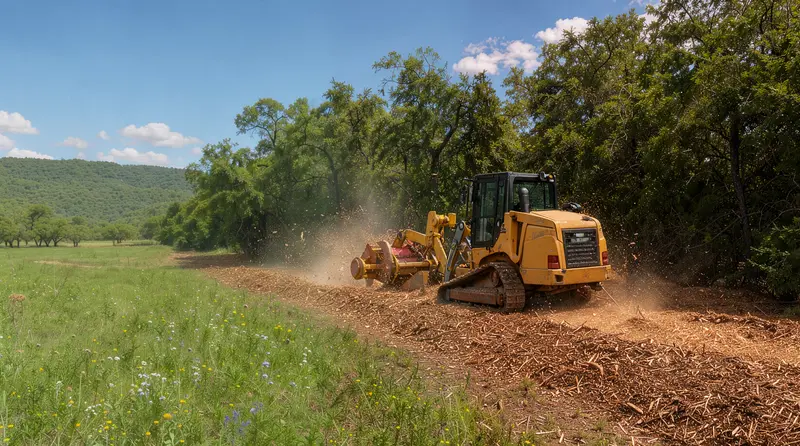 01↗
Cedar mulching per acre: $900-1,400 light, $1,800-2,600 medium, $3,000-4,000 dense.
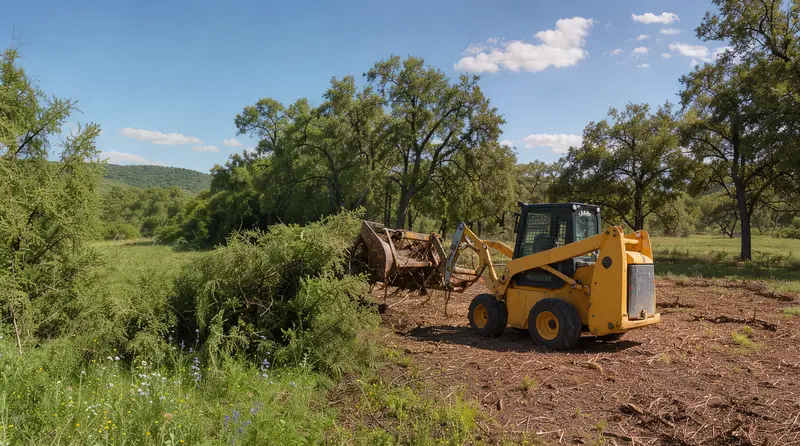 02↗
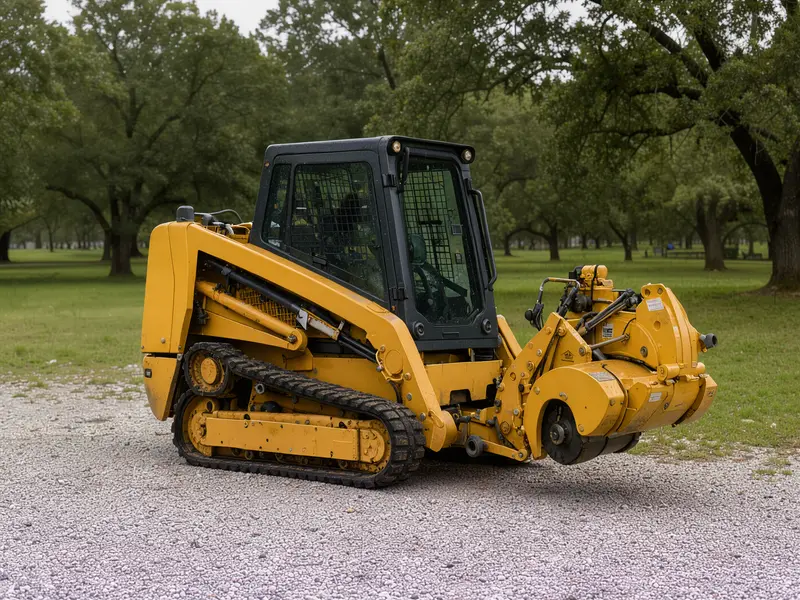
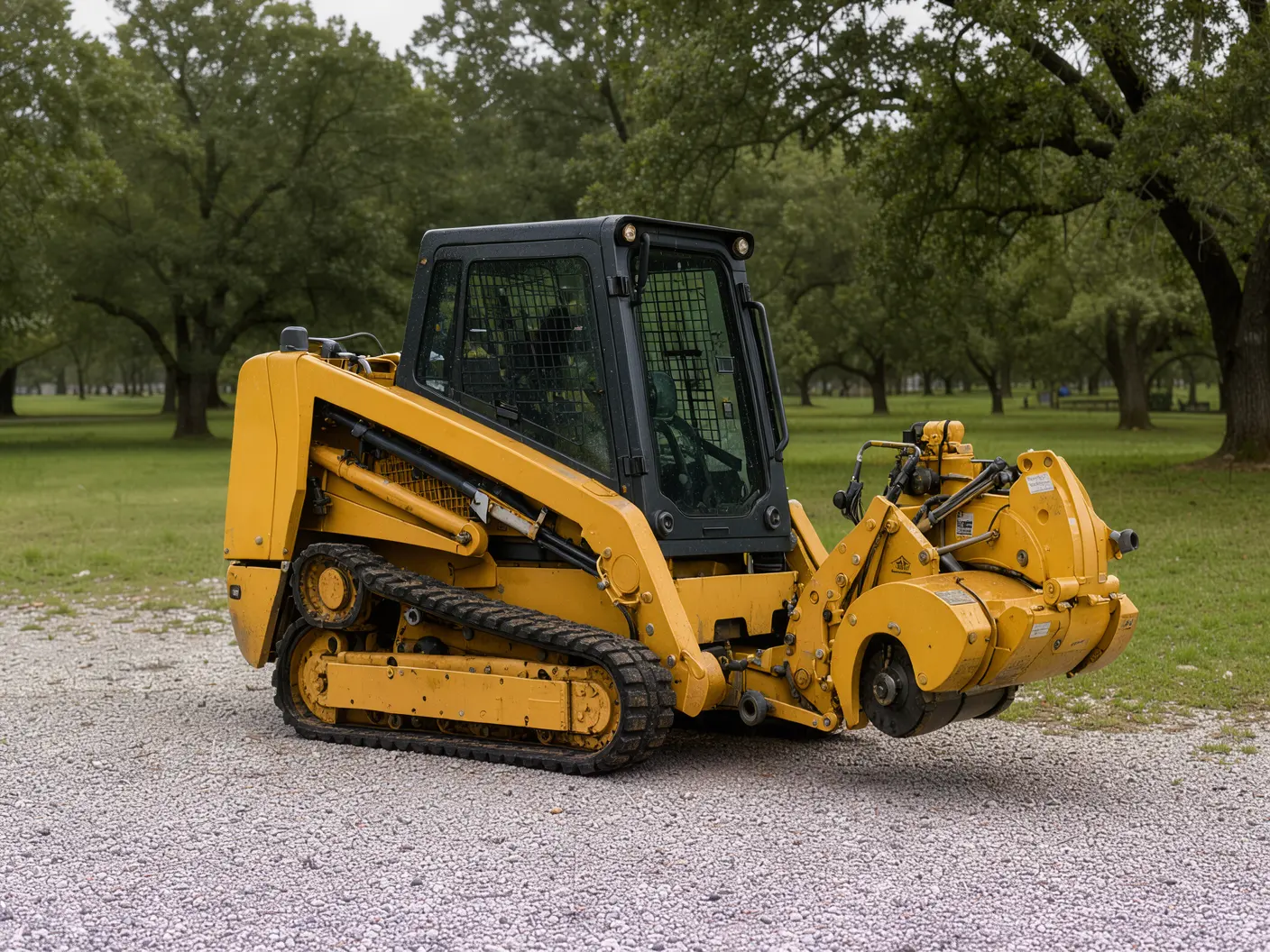
Skid steer mulcher: $2,800 a day. Handles stems to about 8 inches.
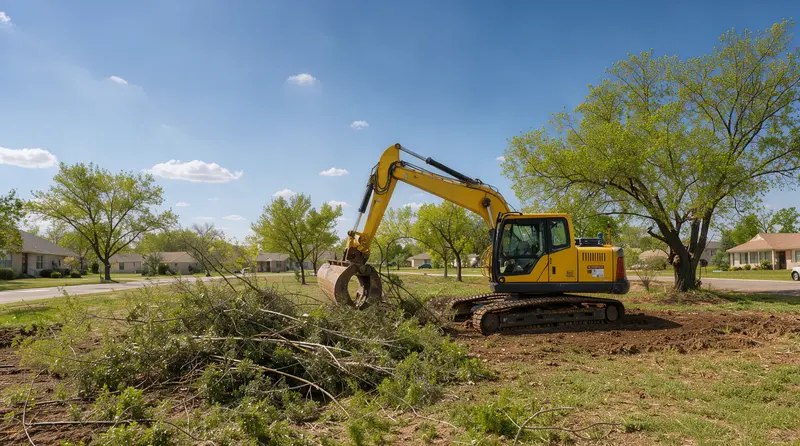 03↗
Half-acre lot = one day skid steer, $2,800.
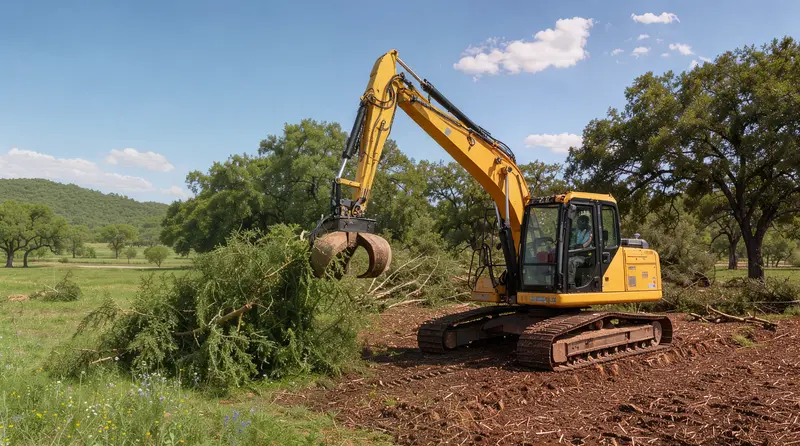 04↗
Dedicated 300-hp mulcher: $4,200 a day plus transport, 8 ft head, handles anything on the tract.
 05↗
$4 per inch of diameter, $175 minimum per stump; lots with 10+ stumps priced by the day.
 06↗
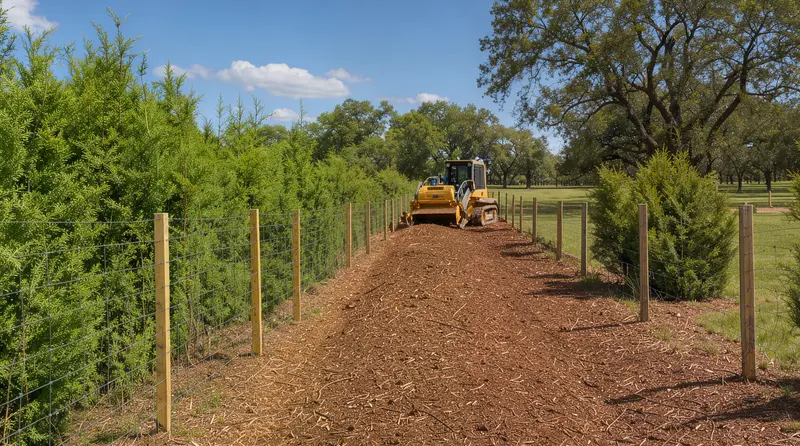
Bush hogging: $60-90 per acre, $400 minimum.
 07↗
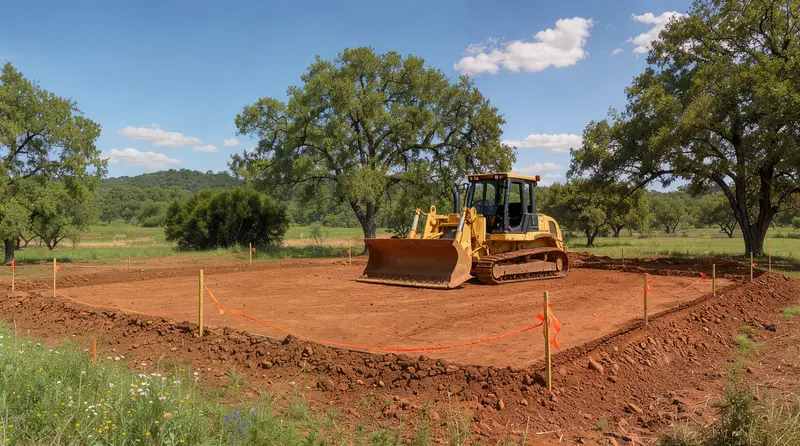
Grubbing / dozer: $160 per hour with operator. Full clearing to dirt: $2,000-4,500 per acre.
12 years as an NRCS field technician writing EQIP Brush Management plans (practice code 314) for ranchers: cedar canopy percent, spring recovery, grazing capacity, deferment. Too many plans sat unexecuted, so she bought her first mulcher in 2014 and has cleared full time since 2015.
Before/after canopy readings, acres-per-day logs, spring-flow stories.
55% cedar canopy. 6 days, 300-hp mulcher. $27,500 plus transport. The spring below the stock tank ran again the next wet season.
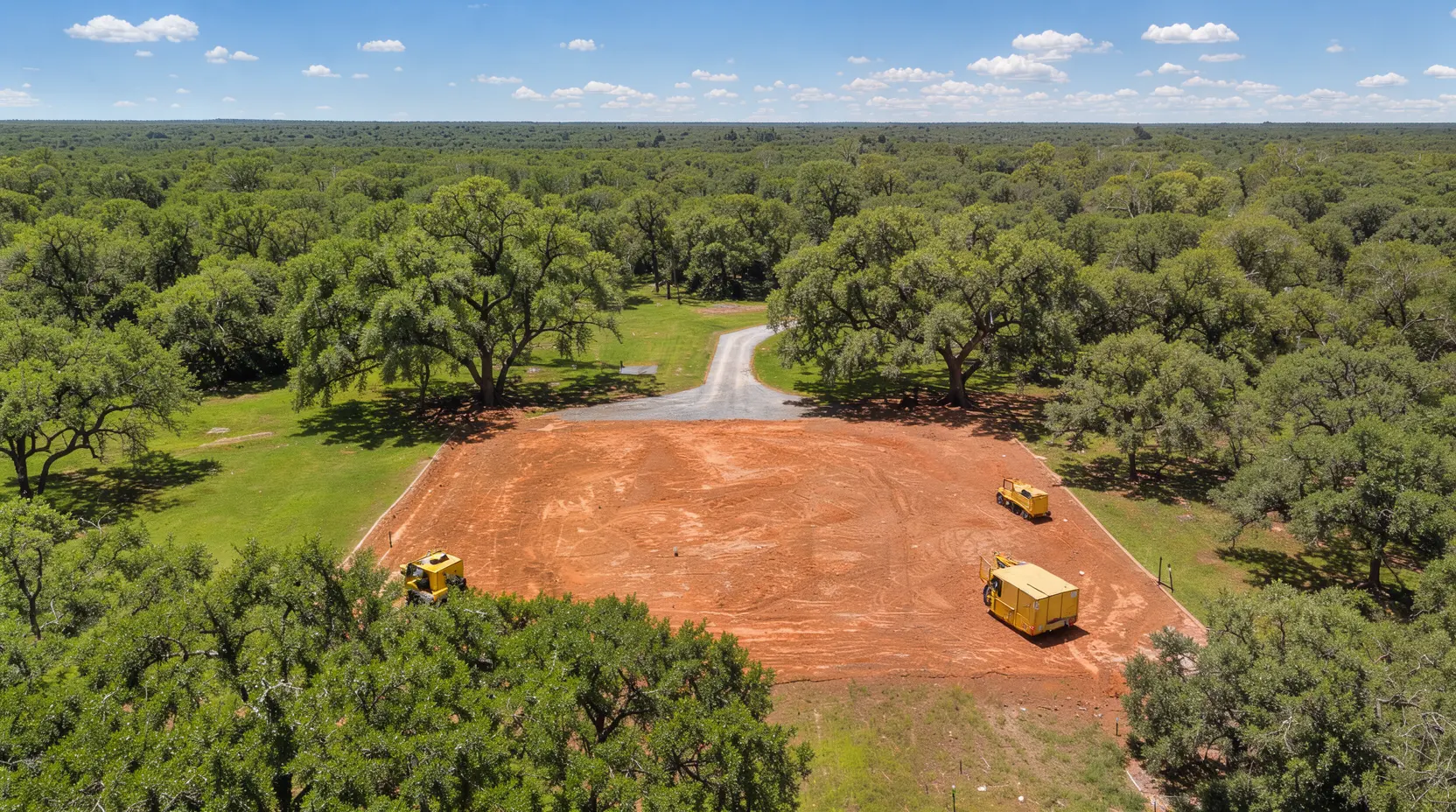
1.2-acre lot. 1 day, skid steer. $2,800.
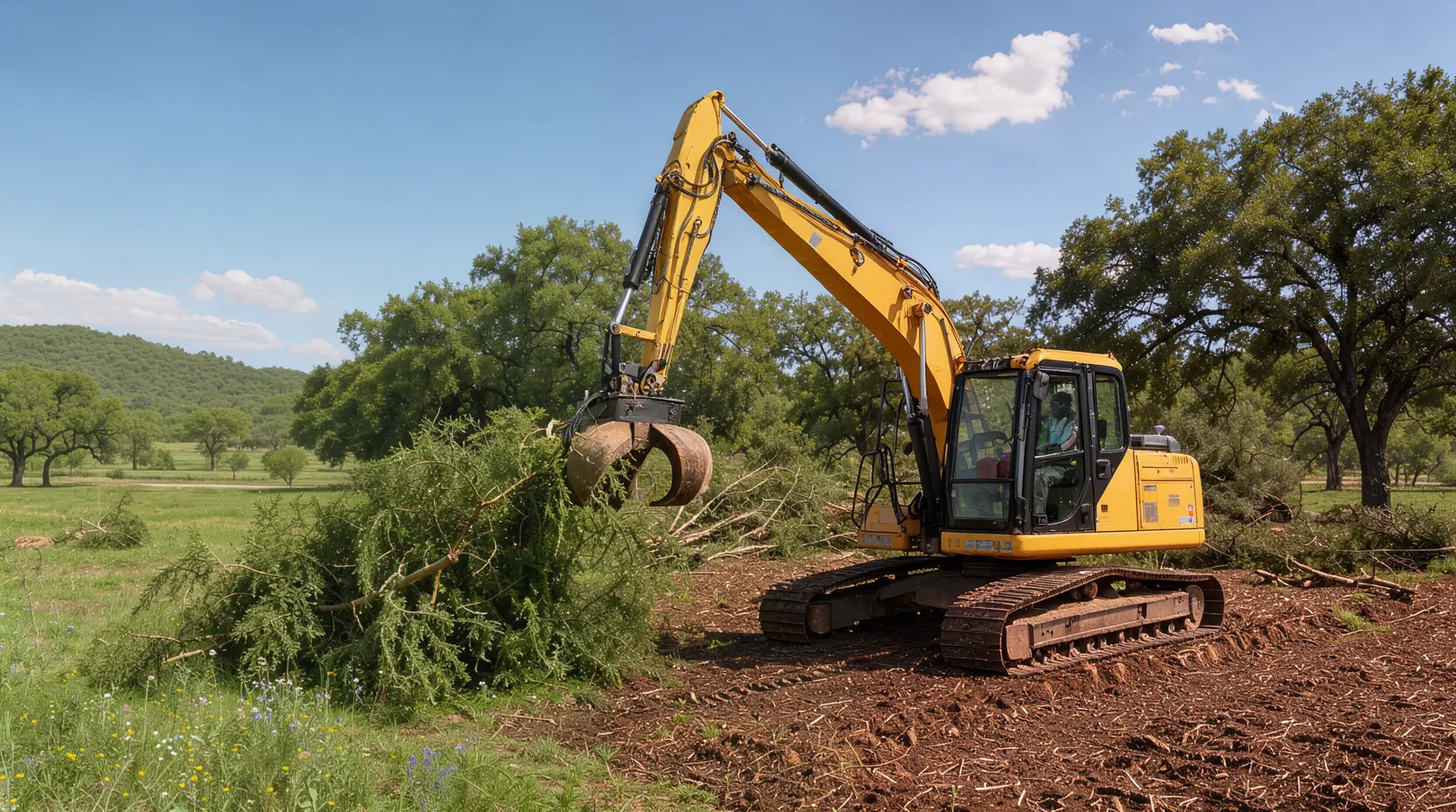
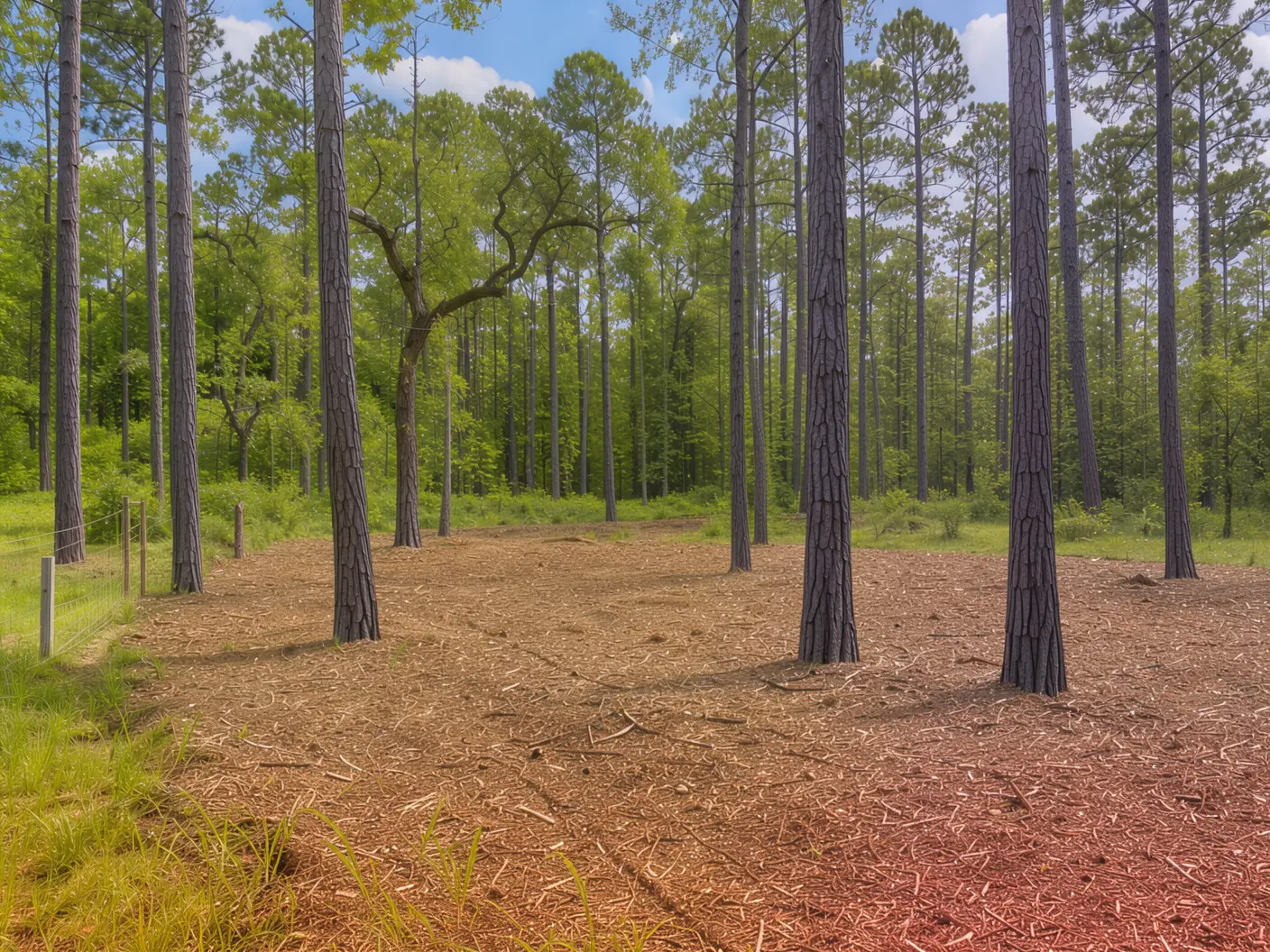
Pine understory and yaupon. 3 days. $11,400.
Mesquite and post oak pasture reclaim. 2 days. $8,400. Bush hog follow-up each June.
Hillside. Selective cedar for the oaks and the view. 2 days, skid steer. $5,600.
Hackberry and bois d'arc. 1 day. $2,800 plus 11 stumps, $420.
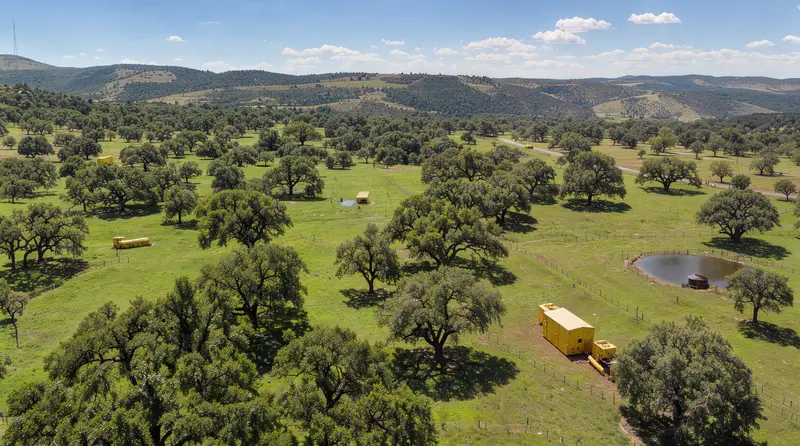
Office and main yard in Johnson City (Blanco County). Crews in Lindale (East Texas) and Weatherford (North Texas).
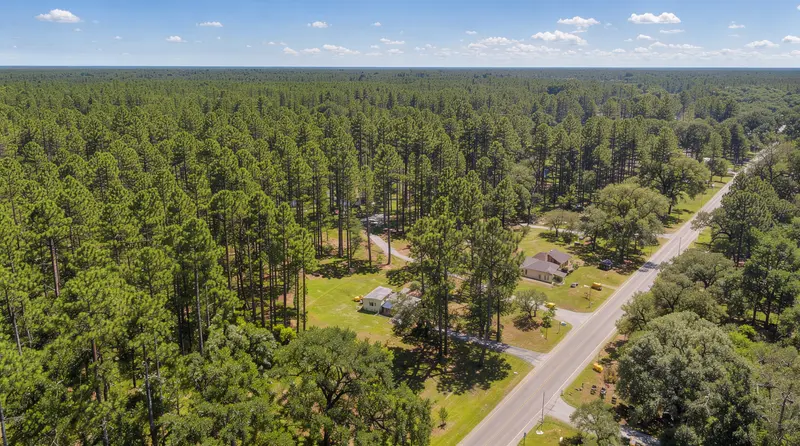
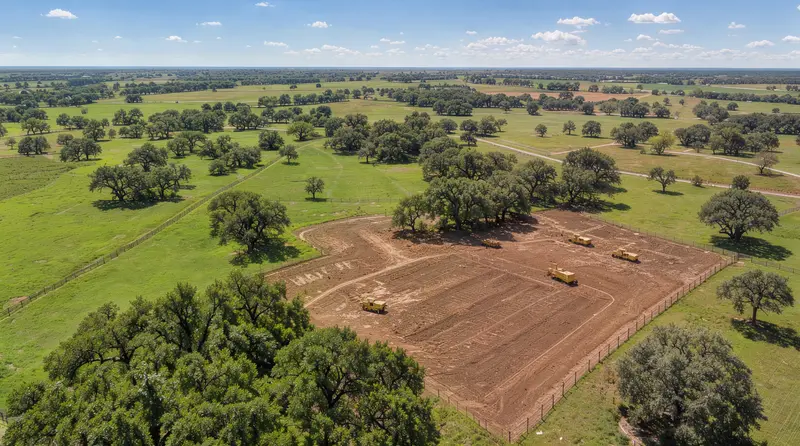
Rock adds a day in the Hill Country. I put that in writing before the trailer leaves the yard. EQIP cost-share typically covers 50 to 75 percent of the NRCS payment-schedule rate for brush management (practice code 314) once a plan is approved.
Open the calculatorFour steps and a written number. Fill out the form or call (832) 987-3495. Teo takes every call at the Johnson City office and calls you back before the end of the business day. Within 60 miles of a yard, I or a crew lead walks the tract with you: a free estimate and a free consultation on what to keep. We read the canopy, check the rock or the clay, and flag the oaks you want.
Insured crews, and the price you signed is the price you pay unless you add acres. Land clearing contractors who bid without walking the tract are guessing; specialized equipment does not fix a bad count. We handle projects from a 0.6-acre lot to a 300-acre ranch. Need land cleared this season? Send the form for land clearing today and Teo will give you the first open crew date.
We specialize in forestry mulching and brush clearing on cedar, mesquite, yaupon and pine understory, and we clear lots to dirt where a slab is going in. Here are the professional land clearing services available from our yards.
Mulching services and brush and tree work run by the day. Right of way clearing for fence lines, driveways and a culvert crossing runs on the same day rates. Excavation services for ponds and foundations are a different trade, and Teo will name an excavation contractor our crews have worked beside. Pick the service that matches your tract and send the form.
Five regions, three yards, one 60-mile service area around each yard. Johnson City covers the Hill Country and the I-35 counties from Temple to San Marcos. Lindale covers the Piney Woods. Weatherford covers the DFW ring. The Gulf Coast has no Pruitt yard, so transport is billed from Johnson City.
We clear the same way in all five: read the canopy, name the day count, mulch in place.
Canopy percent sets the price on every tract in the state, whatever is growing on it. Under 30 percent canopy is light work. Over 60 percent is old growth, and the 300-hp machine comes out.
Overgrown land does not get cheaper by waiting. Juniper at 25 percent canopy this year is 35 percent in five. Vegetation management on a schedule, the same forestry services a timber owner buys, costs less than one dense clearing project. A forestry mulcher turns that vegetation into mulch two to three inches deep. The mulch holds the soil and lets grass seed catch.
Land clearing here runs $900 to $4,500 per acre, and the number depends on canopy, soil and how many days it takes to clear. Rock or caliche adds a day in the Hill Country. Wet blackland adds a day on the DFW side from November to April. I put the extra day in writing before the trailer leaves the yard, not on the invoice after.
Two invoices from the log. We cleared 42 acres in Blanco County at 55 percent cedar canopy: 6 days on the 300-hp mulcher, $27,500 plus transport. The spring below the stock tank ran again the next wet season. A 1.2-acre lot in Liberty Hill, Williamson County, took one day on the skid steer: $2,800. Large jobs get a per-acre price, lots get a day price, and both are cost-effective next to a dozer and a burn pile. Call (832) 987-3495 or send the form for a written number on your acres of land.
Land clearing and brush removal in Texas needs no state permit. You may clear your land without asking anyone in Austin. The rules that do apply are local. Burn bans are declared by the county judge or the commissioners court, and TCEQ outdoor burning rules govern any pile you light. Mulching leaves no pile, so a burn ban never stops a mulching job.
A construction site in the floodplain needs the permit before the mulcher, not after. Land development inside a city limit needs the tree survey first. Tell Teo the county and we will minimize the paperwork to what applies.
EQIP cost-share pays 50 to 75 percent of the NRCS payment-schedule rate for brush management, practice code 314, once your plan is approved. I wrote those plans for twelve years. A plan is a land management record: canopy percent by field, the treatment method, the acres treated each year and the grazing deferment after. The schedule pays by the acre at a state rate, not by what you spent, so a mulching bid that beats the schedule leaves money on your side of the table.
Bring me your approved plan and I will read it in ten minutes and tell you what it pays on your tract. I do not write plans for NRCS any more, and your local field office does that for free. The timeline runs about a year: application in fall, ranking in winter, contract in spring, and you clear the next dry season. Our crews log acres per day and canopy readings before and after, which is the paperwork NRCS wants at payout. Twelve years of brush plans taught me one thing: paper does not cut cedar. Ask Teo for the EQIP checklist when you send the form.
Most trusted land clearing companies in the state work one metro. Our crews clear in five regions from three yards, and every county below has its own page.
Our crews cover surrounding areas between those counties too; land-clearing services in Texas outside a 60-mile circle carry transport, stated on the quote. Open your county page or send the form with your clearing needs.
Call (832) 987-3495. Teo will call you back before the end of the business day.
Most land clearing here runs $900 to $4,500 per acre, and it costs $2,800 to clear a half-acre lot in one day on the skid steer. Light cedar under 30 percent canopy sits at the bottom of that range. Full clearing to dirt on a dense tract sits at the top. Rock and wet clay move the day count, and the day count moves the price.
No, there is no state permit to clear land you own. You may need a county floodplain development permit in a FEMA mapped floodplain, a city tree permit inside Austin, San Antonio or Georgetown, and a TCEQ Water Pollution Abatement Plan on the Edwards Aquifer Recharge Zone. Tell Teo the county and we will check which ones apply.
Bush hogging at $60 to $90 per acre is the cheapest way to clear land that only needs the tops knocked down. For brush that has to go, forestry mulching beats a dozer and a burn pile because there is no hauling, no pile and no burn-ban wait, and the mulch stays as ground cover. Efficient clearing is the machine that matches the brush, not the cheapest hourly rate.
Sometimes. The state treats certain real property services as taxable, while clearing for agricultural production under an ag or timber number, or as part of new construction, is generally handled differently. The quote shows tax as a separate line when it applies to your job. Confirm your own case with a CPA before you count on the exemption.
Two to three days on the skid steer for light to medium brush, or one day on the 300-hp mulcher if the tract is open enough to run it. Our Blanco County job logged seven acres per day at 55 percent canopy on the big machine. A 15-acre pine understory tract in Smith County took three days.
Fill out the form or call (832) 987-3495, and Teo will call you back before the end of the business day. Within 60 miles of Johnson City, Lindale or Weatherford, I walk the property with you for free and hand you a written price with the day count. Jobs beyond that circle carry transport, quoted up front.
Fill out the form or call (832) 987-3495. Teo will call you back before the end of the business day.
(832) 987-3495