On this page
- Land Clearing Services on the Gulf Coast: Tallow Lots, Site Preparation and Excavation Referrals
- Vegetation and Terrain on the Gulf Coast: Tallow, Yaupon, Huisache and Gumbo Clay
- Floodplain and Wet Ground: Why Forestry Mulching Floats Where Dozers Sink
- Land Clearing Cost on the Gulf Coast per Acre: Mulching Services, Lots and Transport
- Rules Before You Clear Your Land on the Coast: Floodplain, Burning and HOA Lines
- Gulf Coast Counties Our Land Clearing Company Serves, Transport from Johnson City, TX
- FAQ
Land Clearing Services on the Gulf Coast: Tallow Lots, Site Preparation and Excavation Referrals
Five land-clearing services available on the coast, each a service we price by the day or the acre, with transport from Johnson City on its own line.
- Lot clearing: a half-acre residential lot in Conroe, Fulshear or Corpus Christi is one skid steer day, $2,800, cleared to the pad line.
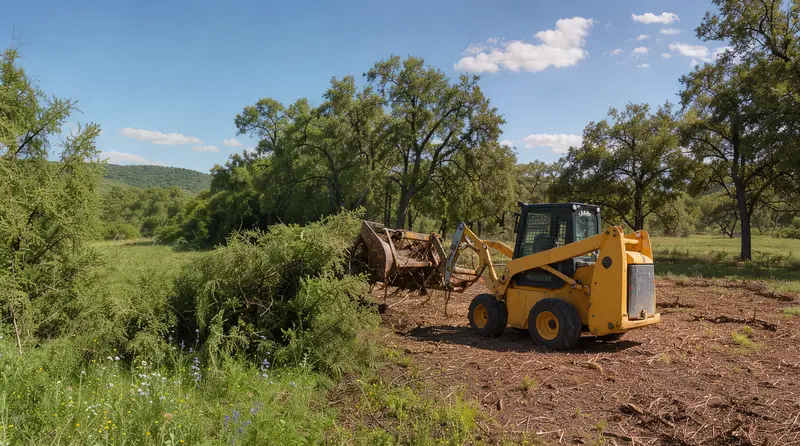
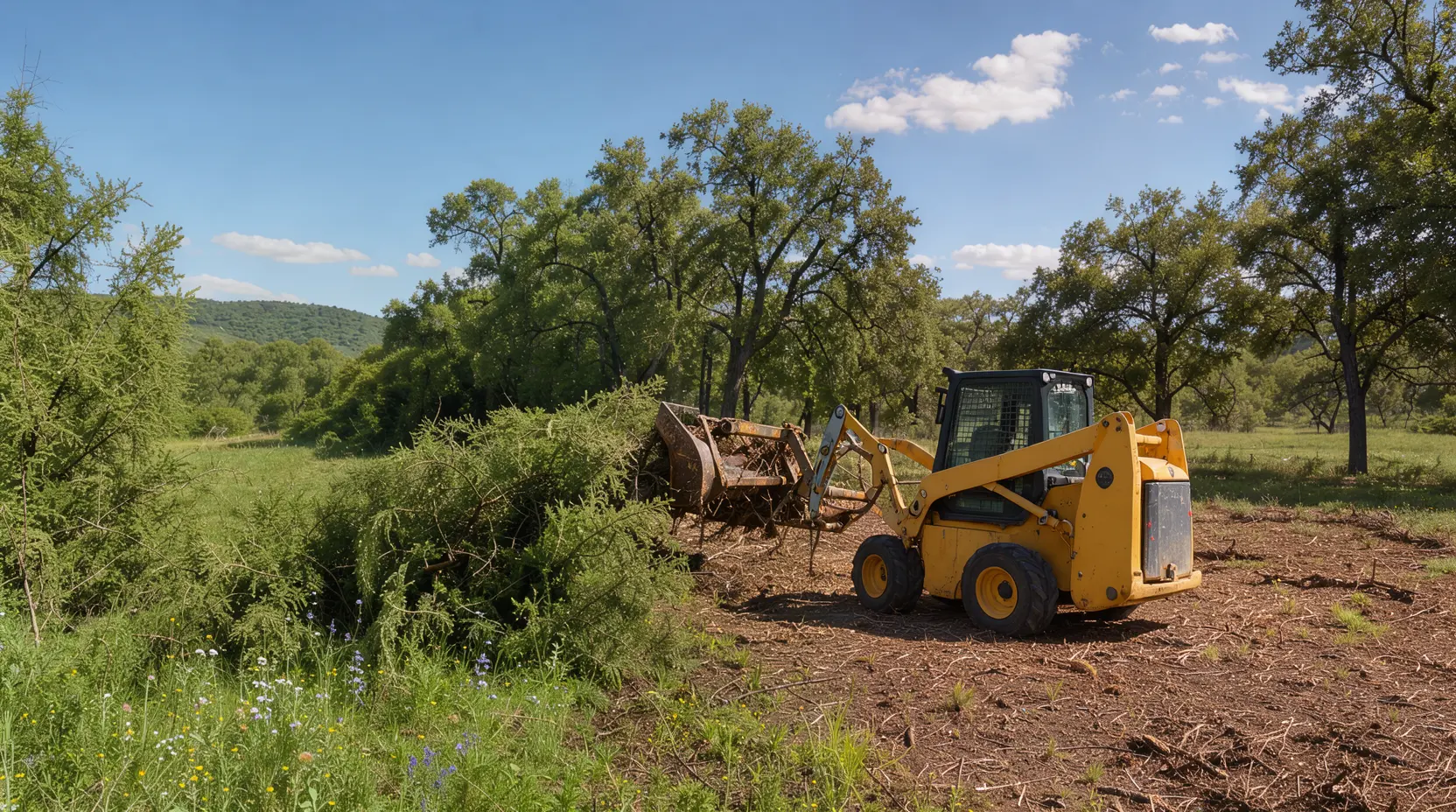
- Forestry mulching: a forestry mulcher grinds Chinese tallow and yaupon into mulch where it stands, no pile and no trucking. Mulching services run $900 to $4,000 per acre by density.
- Brush clearing and brush removal: we clear huisache and mesquite on the coastal flats toward Nueces and yaupon thickets north of Conroe, by the day.
- Stump grinding at $4 per inch, $175 minimum per stump; tallow stumps resprout, so we grind below grade.
- Selective tree removal and selective clearing: tallow out, live oak and pine left standing on an acreage lot.
Site preparation runs to rough grade and stops. We do not pour slabs, set septic, drill wells or take down a house; I know people who do. Excavation services for detention ponds are an excavation contractor's job, and Teo can name one. Right of way clearing for a driveway, culvert line included, runs on the day rate; forestry services like thinning a pine stand in Montgomery run by the acre. We specialize in brush and tree work and handle projects from a quarter-acre Katy lot to 40 acres of coastal brush. Tell Teo the service and the flood zone, and we clear to that line.
Vegetation and Terrain on the Gulf Coast: Tallow, Yaupon, Huisache and Gumbo Clay
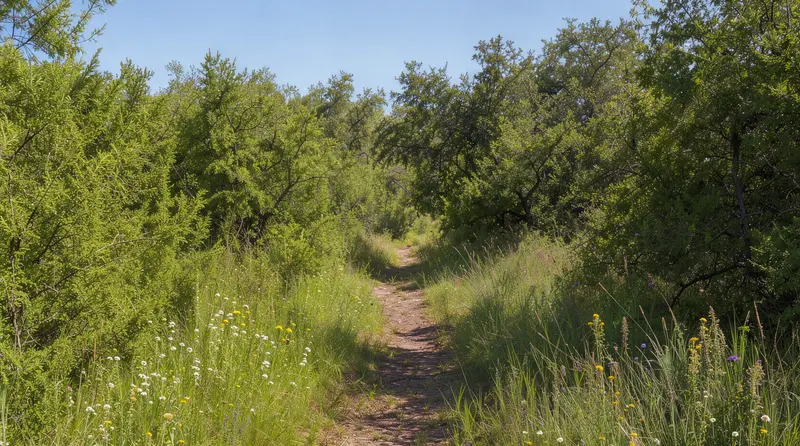
Chinese tallow fills every vacant lot from Conroe to Fort Bend. It seeds in from the ditch, grows six feet a year, and will overgrow a half-acre to a closed canopy in under a decade. Yaupon comes in under it, and north of Montgomery the loblolly understory looks like East Texas. Toward Corpus Christi the brush changes to mesquite and huisache on salt-prairie clay, thorny and low.
The ground is the terrain problem, not the hills; there are none. Gumbo clay is flat and slow to drain, and after a rain it holds water for days. Gumbo clay has two settings, wet and wetter, and neither one is dry. A tracked mulcher floats on it and turns vegetation into mulch two inches deep, and that mulch keeps the clay from sealing; a dozer sinks to the belly pan and leaves ruts that hold water until July. The right equipment on the coast is a mulcher first, with the dozer only for the pad on a dry week. Specialized equipment and advanced equipment do not change clay; equipment and expertise get the machine back on the trailer. Overgrown land in a city limit or a MUD draws code letters fast, so it pays to clear the trees and brush on a lot like that before the stumps pass 12 inches.
Floodplain and Wet Ground: Why Forestry Mulching Floats Where Dozers Sink
Most of the coastal tracts we clear sit in or next to a FEMA mapped floodplain. That changes two things: the permit and the machine. A county floodplain development permit comes before dirt moves, and in Harris that runs through the Harris County Flood Control District. Mulch left in place is not fill, which matters on the permit. Clearing vegetation without changing grade is usually the lighter permit path, which is one more reason we clear with the mulcher first and the dozer last.
Density prices the same here as inland. A 15-acre pine understory and yaupon tract in Smith County took three days to clear, $11,400, and a Montgomery County tract of the same cover runs the same $1,200 to $2,000 per acre plus transport. The log read five acres per day; efficient clearing on wet ground is tracks and timing, not horsepower. On a tract we walked last winter north of Conroe, the last contractor's dozer ruts still held water, and the mulcher ran over them without a mark. Land management after we clear is a bush hog pass each summer to catch tallow seedlings, and vegetation management on that schedule beats a second dense clearing project every time. Tell Teo your flood zone letter from the FEMA map and the quote follows it.
Land Clearing Cost on the Gulf Coast per Acre: Mulching Services, Lots and Transport
Coastal land clearing runs $900 to $4,500 per acre, plus transport from Johnson City as a fixed number on the quote. Two dedicated land clearing mulchers, one price sheet, one service call minimum.
- Forestry mulching, light tallow and brush under 30 percent canopy: $900 to $1,400 per acre. Medium cover: $1,800 to $2,600. Dense old-growth or mesquite and huisache flats: $3,000 to $4,000.
- Pine understory and yaupon north of Conroe: $1,200 to $2,000 per acre.
- Clear land to dirt for a slab: $2,000 to $4,500 per acre by density, rough grade included. We clear the pad on a dry week.
- Skid steer mulcher: $2,800 a day plus transport beyond 60 miles of a yard. 300-hp mulcher: $4,200 a day plus transport.
- Stumps $4 per inch, $175 minimum. Bush hogging $60 to $90 per acre, $400 minimum. Dozer $160 per hour. Haul-off $650 to $1,200 per load, $1,100 minimum service call.
Wet ground adds a day the same way wet blackland does inland, and I name it before the trailer leaves. Large jobs over 20 acres get a per-acre number; lots get a day price; both are cost-effective against a dozer stuck to the axles and a burn pile you cannot light inside Houston. Send the form or call (832) 987-3495 and give Teo the county, the acres of land and the flood zone. He calls back before the end of the business day with the transport number and a walk date.
Rules Before You Clear Your Land on the Coast: Floodplain, Burning and HOA Lines
Land clearing and brush removal in Texas needs no state permit, and you can clear your land on a rural Nueces or Montgomery tract once the floodplain check is done. Five local rules come up.
- FEMA mapped floodplain: county floodplain development permit before dirt moves. Harris County Flood Control District in Harris; county engineer in Montgomery, Fort Bend and Nueces.
- Coastal V zones in Nueces along Corpus Christi Bay and the Laguna Madre: tighter rules on fill and grade, so we mulch and leave the elevation alone.
- Burning: no open burning inside Houston city limits, TCEQ outdoor burning rules everywhere else, and county burn bans from the county judge in dry summers. Mulch is not a pile and needs no burn permit.
- HOA and MUD rules in master-planned communities around Katy, Fulshear, Conroe and The Woodlands: tree lists, work hours and truck routes, checked before we clear.
- Land development on a construction site inside a city limit runs through the city's tree and drainage review before we clear.
Of all the land clearing services in Texas, coastal lots carry the most paperwork per acre, and most of it is the floodplain letter. Send Teo the county and the flood zone and we will minimize the list to what applies.
Gulf Coast Counties Our Land Clearing Company Serves, Transport from Johnson City, TX
Four counties, each with its own page: Harris (Houston), Montgomery (Conroe), Fort Bend (Fulshear), Nueces (Corpus Christi). Surrounding areas like Waller, Brazoria and San Patricio are quoted the same way, transport on its own line. Census Building Permits Survey 2025 counted 16,940 single-family permits in Harris, 11,597 in Montgomery and 9,638 in Fort Bend, which is why tallow lots are most of the coastal work. Austin, San Marcos and San Antonio tracts run off the same Johnson City yard without transport, so a Central Texas job and a coastal job can share a week. If you need land cleared before the spring rains, open your county page or send the form for land clearing today with your clearing needs.